
Cleveland Heights Previous Residents Sources
Different records answer different parts of the question of who lived here before. The Cuyahoga County recorder provides the ownership and document trail. Tax duplicates and parcel material bridge ownership across eras. A directory or census can place a listed household at an address on a particular publication or census date, while maps, permits, and building cards explain the structure between transfers. The most reliable Cleveland Heights previous residents search keeps each source in its own role and records the date, title, and identifying parcel information.
| Source | Years It Covers | Where Held | What It Shows |
|---|---|---|---|
| Recorded instruments | 1810 to present, as stated | Cuyahoga Recorder portal and counter | Deed chain, parties, dates, consideration, and legal description. |
| Historic tax records | About 1819 to 1986 | Cuyahoga County Archives | Owner and value trail, including construction-value clues. |
| Online property and tax panels | About 1987 to present | MyPlace and Fiscal Office | Parcel, current-to-recent transition, transfers, and tax panels. |
| Maps and building cards | Maps about 1860 to 1945; cards about 1935 to 1970 | Cuyahoga County Archives | Lot, street, structure, image, and building-characteristic clues. |
| City directories and census | 1925 Heights inclusion documented; separate Heights directories from 1949; census through 1950 released | CPL, Archives, libraries, and federal genealogy access | Listed household or address evidence at a dated point in time. |
City permits are another locally useful source. For some homes built after 1915, City Hall holds original permits that may identify an owner, builder, architect, or project date. They date a property event and do not prove that every person connected with that record lived at the address.
Cleveland Heights Previous Address Worksheet
Before searching backward, create one worksheet for the Cleveland Heights address. List the present situs address, permanent parcel number, subdivision or lot language, full legal description, known street-number forms, street-name variants, current mailing address as a labeled tax field, acquisition document number, and the date of research. This simple record prevents a past residents trail from drifting to a similarly named street or a nearby parcel after a map, directory, or deed uses an older form.
The Heights Libraries house-history guide is a local starting point for organizing a Cleveland Heights property question.
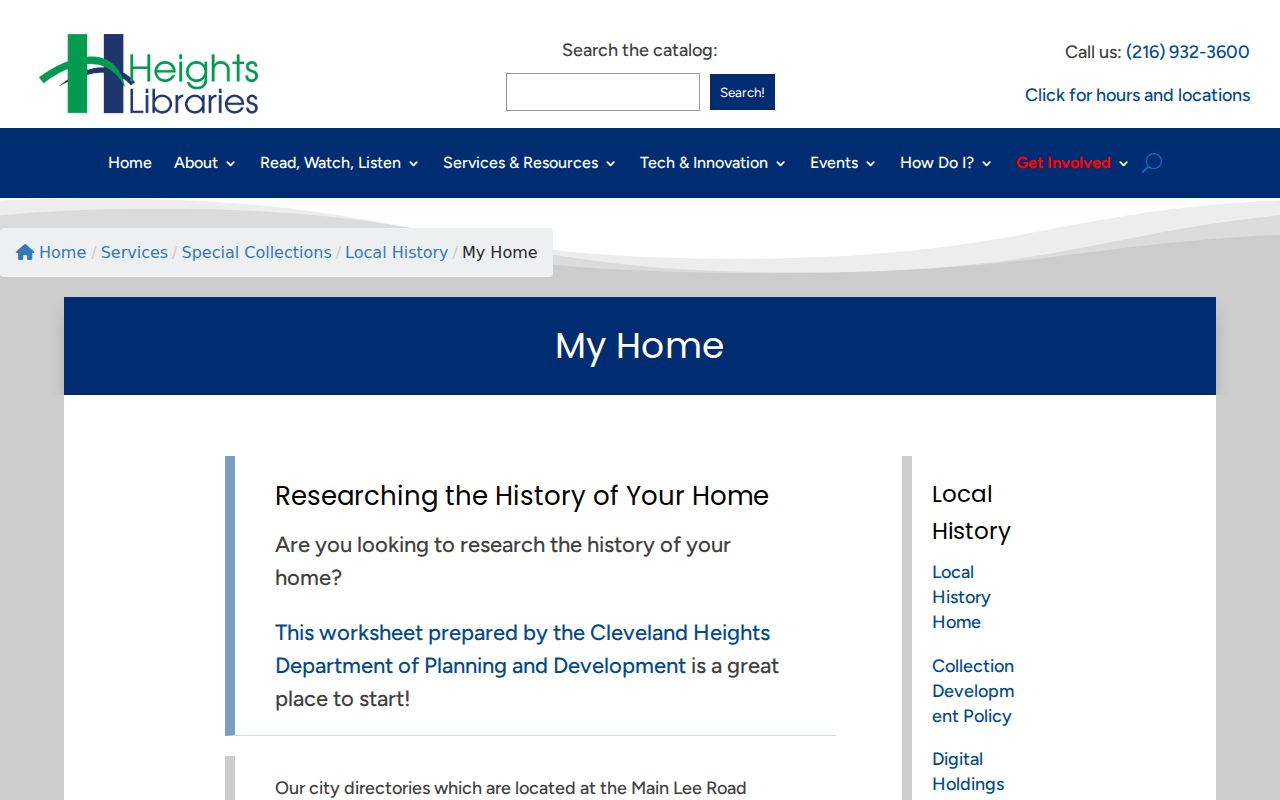
The guide supports a research trail built from the address, rather than a loose collection of names pulled from unrelated years.
- Situs address
- The physical location of the parcel. It may differ from where tax correspondence is sent.
- Parcel number
- The permanent county identifier that connects the property card, maps, transfers, and tax history.
- Legal description
- The recorded lot, subdivision, condominium, or other parcel language that survives a street-name change.
- Document number
- The recorder’s identifier for a filed instrument, useful when a party name has variants.
Cleveland Heights Previous Resident Deeds
The deed chain is the backbone for an address history, but a deed party is not automatically a past resident. Start with the current parcel in MyPlace and capture the owner, parcel ID, transfer date, and legal description. The property page provides Transfers and a Get a Document Link. Then use the Cuyahoga Recorded Document Search to follow the instrument history. In an ordinary conveyance, the present owner appears as grantee on the acquisition document, and the prior owner appears as grantor.
The Cuyahoga County Recorded Documents overview introduces the official deed-record route for Cleveland Heights previous residents research.
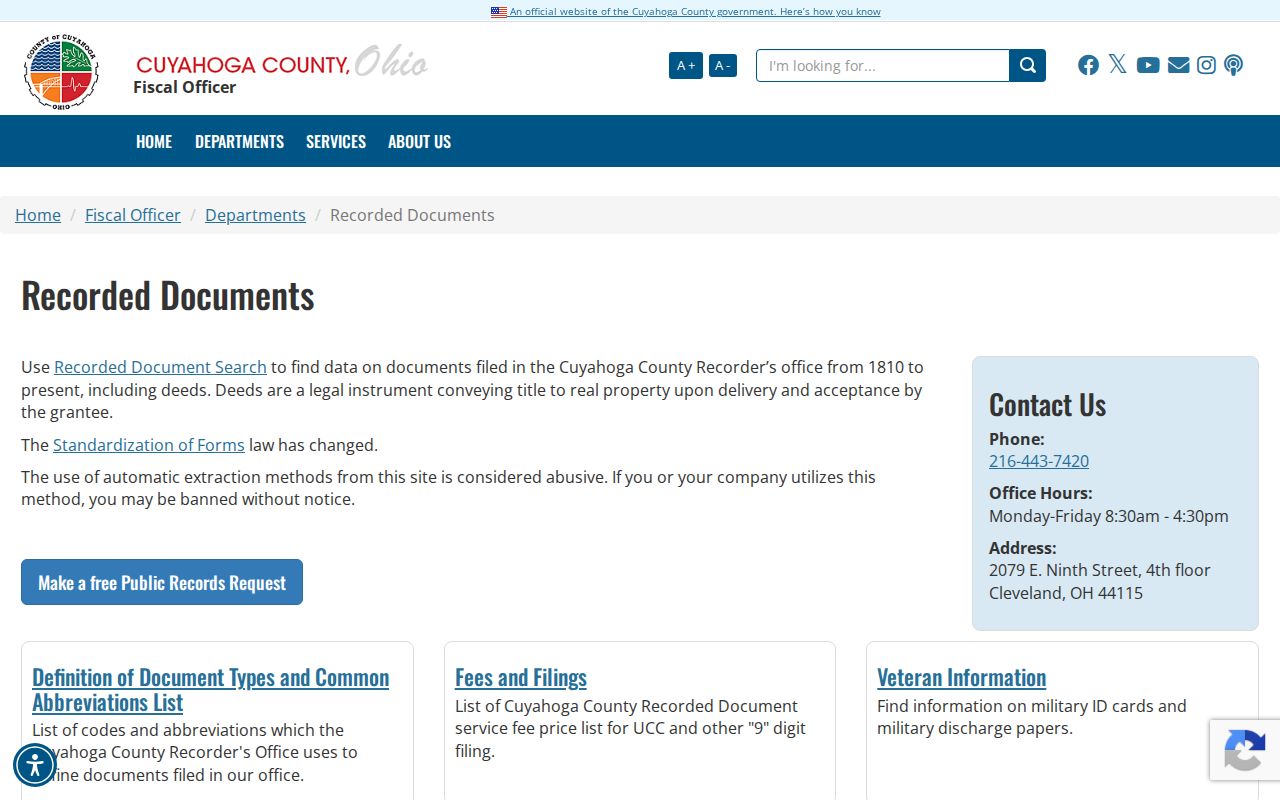
Recorded documents are described by the county as running from 1810 to the present, with online searching, free downloads, certified-copy ordering, and a recorder-counter option.
- Search MyPlace by Cleveland Heights address and save the parcel number, legal description, and transfer details.
- Open the current acquisition instrument through the property link or search the recorded-documents portal by party, parcel, address, or legal description.
- Read the current owner as grantee and the prior party as grantor, then preserve the instrument date and document number.
- Search that prior party as grantee at an earlier date and repeat the sequence, keeping the legal description on every row.
- When a document is a sheriff’s deed, survivorship deed, transfer-on-death affidavit, estate certificate, or corrective deed, record the branch and move to the applicable court or recorder document type.
- Grantor
- The party giving or transferring an interest in a recorded instrument.
- Grantee
- The party receiving an interest in that recorded instrument.
- Chain of title
- The documented sequence of transfers connected through the same parcel or legal description.
Cleveland Heights Previous Records Bridge
When a Cleveland Heights deed trail reaches an older era, the county’s record split becomes useful. Cuyahoga County Archives holds historic tax records from about 1819 to 1986. The Archives guide directs researchers to online or call access for tax material from about 1987 forward. Comparing tax duplicates can reveal owner or value changes that help place construction or a transfer in time. It does not replace the legal record, but it can point the next search toward a deed, map, or permit.
The Cuyahoga County Archives getting-started information explains the research channels for older Cleveland Heights records.
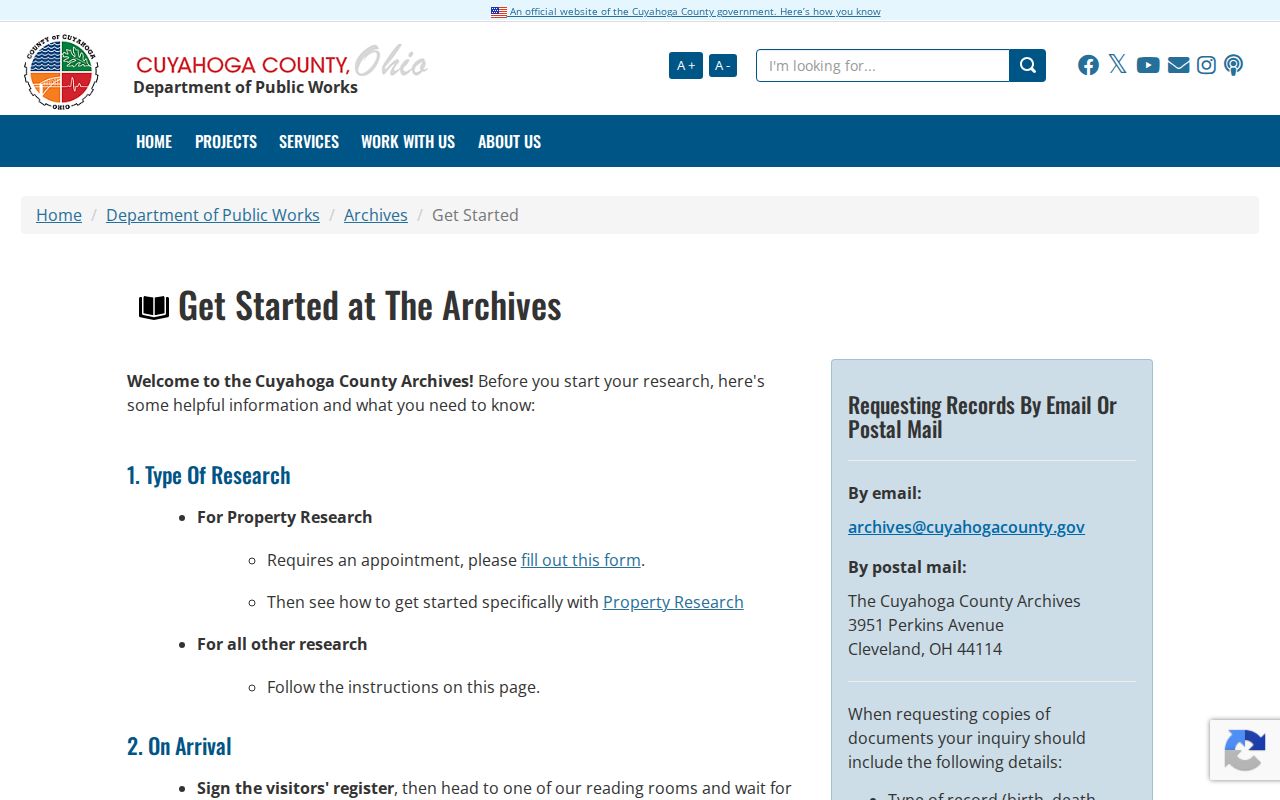
Property research at the Archives is appointment-based, with reference assistance, self-service microfilm, and email or mail request channels also described by the county.
Original map volumes cover about 1860 to 1945. City reference plats exist for 1898, 1912, 1914, 1920, and 1941. These records help connect a current parcel to an older lot or subdivision when the street address alone no longer works.
Note: Copy the map year and the exact lot or plat reference with every historic address finding.
Cleveland Heights Previous Building Clues
A house can leave a dated trail between deeds. Cuyahoga Archives building cards from about 1935 to 1970 may provide building characteristics and, in some cases, image clues. The Cleveland Heights Historical Society notes that some cards have 1950s photographs, footprint details, square footage, attic finish, or exterior notes. Original City permits for some homes after 1915 can identify an original owner, builder, architect, or project. These records are especially useful when a transfer date does not explain when a structure appeared or changed.
The City’s House History program information describes the local focus on original permits and historic structures.
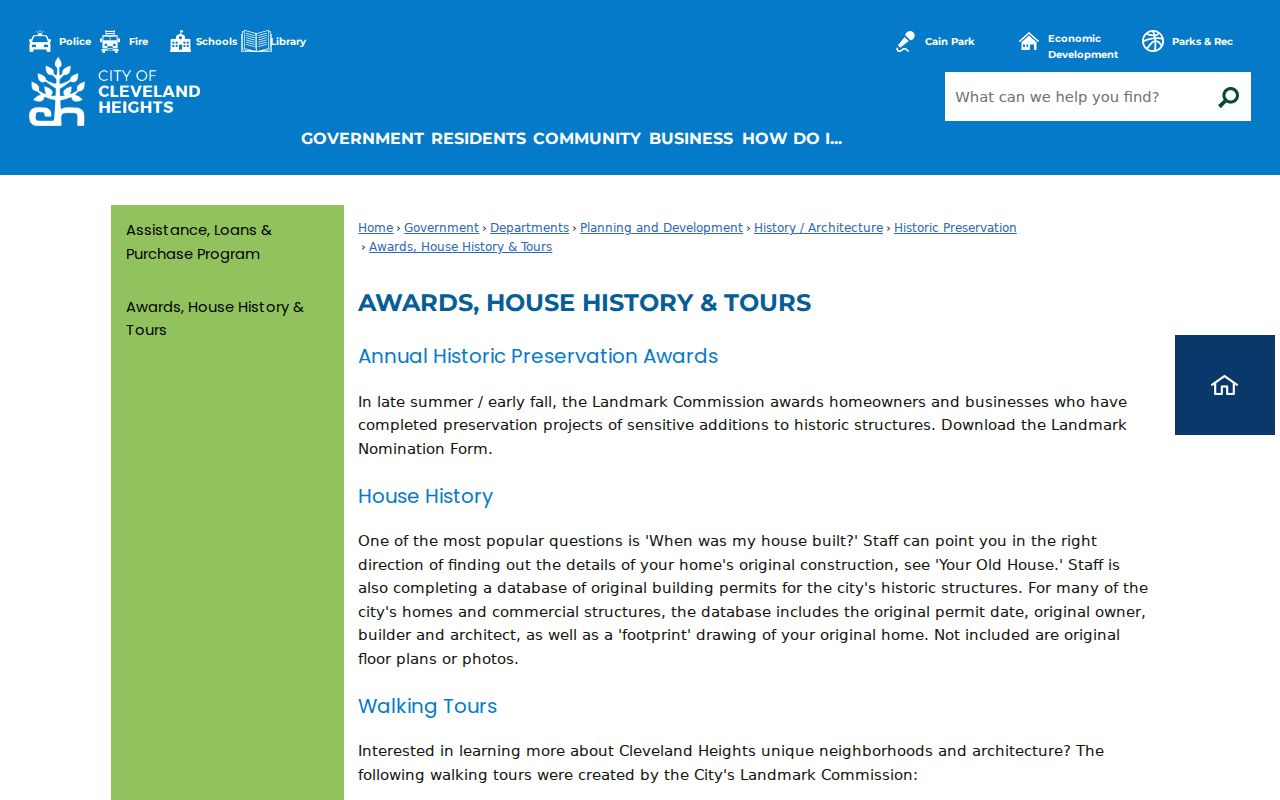
Planning staff is assembling an original-permit database with items such as original permit date, owner, builder, architect, and footprint where available. The City does not describe it as a source for original floorplans or photographs.
Cleveland Heights Previous Directory Divide
A missing Cleveland Heights directory entry can reflect a change in the collection, not a move. Cleveland Heights appears in the documented 1925 Cleveland directory coverage, but the Historical Society reports a separate Cleveland Heights directory from the general Cleveland volumes beginning in 1949. The Cleveland City Directory Co. five-city series begins with 1949, followed by documented issues through 1963. East Suburban City Directory holdings then include selected years from 1964 through 1978/79.
For who lived here before, begin with the address section or a criss-cross directory when one is available, then check the alphabetical volume for the printed name variation. A criss-cross directory runs from address to listed name. A conventional city directory runs from name to address. The collections and their gaps are maintained as a separate research topic on the Cleveland Heights city directory page.
That 1949 transition is a local records story worth noting in a previous residents timeline. It prevents a blank result in a general Cleveland volume from being treated as proof that a household left the address.
Past Cleveland Heights Households
Deeds track interests in land, while past households are shown by dated resident sources. Pair a Cleveland Heights directory close to a released census year with the address, printed name, and publication year. The 1950 federal census is public; later population schedules remain closed until their corresponding release year. A directory can show a listed household or business during its publication cycle, while the census can supply household relationships, age, and birthplace context for its census date.
- Find the address in an available criss-cross or street-by-address listing and transcribe it exactly.
- Check the closest conventional directory for the printed name and address form.
- Pair that dated directory finding with the nearest released federal census record.
- Compare the household result with the parcel, deed, and tax chronology instead of assuming one record tells the entire story.
Heights Libraries also holds local history material, Heights High yearbooks and alumni directories, Sun Press and Cleveland Press microfilm, and local archival sources. These are useful corroborating paths for a dated address question, not a current resident list.
Cleveland Heights Previous Probate Trail
When a previous resident or owner disappears from a property trail, a death notice, obituary, cemetery record, or estate record may explain the next transfer. Begin with the exact spelling and date found in a deed or directory. Cuyahoga County Archives lists estate-index coverage from 1813 to 1993 and estate case files from 1813 to 1918. For a newer estate, use the Cuyahoga County Probate Court process and pair the case with the recorder document number or legal description.
Transfer-on-death affidavits, estate certificates, and fiduciary deeds should be treated as their own branches in an address history. They can connect heirs or an estate to a recorded transfer without turning a name in the file into proof of a past Cleveland Heights household.
Cleveland Heights Previous Address Changes
Historic Cleveland Heights research has a documented address problem. Local historical material describes four-digit numbering in many areas, an exception on Cedar, and discontinuities at municipal boundaries. Historic-district records also identify renamed streets, including Center Avenue to Hampshire Road, Preyer to Somerton, Florence to Radnor, and Hurst to Middlehurst. No official citywide renumbering chronology was found, so it is not safe to assign a blanket renumbering year to an old address.
When an old address fails, return to the legal description, permanent parcel number, period plat, and map before substituting a modern street name. That bridge preserves the evidence trail for Cleveland Heights previous residents across maps, deeds, tax records, directories, and permits.
Note: Keep each old and current street form in the address worksheet rather than overwriting the older version.