
Find Cleveland Heights Resident Records
Cleveland Heights does not keep one public household list. The dependable route changes with the question. A deed or parcel question begins with the Cuyahoga Fiscal Office. A registration question belongs with Ohio's voter system. A dated family-history question often belongs in a library directory, a County Archives volume, or a probate index. Each record describes a role at a particular time. A property card can identify an owner, while a city directory can identify a listed occupant in the year printed.
Use the strongest detail already known, then keep the record date with the result. A common name needs another anchor such as a parcel number, document number, occupation, court case number, or a directory address. That practice prevents an owner, a court party, and a historical listing from being treated as the same person merely because the names match.
- For an address, search MyPlace by City and Address, then save the parcel number and legal description.
- For ownership history, follow the parcel's transfer lead into the Recorded Document Search and compare grantor and grantee roles.
- For a registration or precinct question, use the Ohio voter form with first name, last name, and Cuyahoga County.
- For a past household, locate the correct directory year, then confirm it with maps, tax records, census material, or probate.
- When an online record stops, ask the custodian or Cuyahoga County Archives for the existing record by name, date, address, or volume.
Note: An absent online result can reflect a former name, a record date, a different custodian, or a protected record.
Cleveland Heights Resident Record Offices
Most Cleveland Heights resident-record questions cross a city and county line. The Fiscal Office maintains the property and recorded-document routes. The Board of Elections administers registration resources. City departments retain permits and other municipal files, while the Law Department directs general City requests through NextRequest. Start with the office that created the record. That produces a clearer answer than a broad name search.
Fiscal Office Transfer and Recording
2079 E. Ninth Street, 4th floor
Cleveland, OH 44115
216-443-7420
Cuyahoga Fiscal Office
Property, parcel, transfer, tax, and map records
Cuyahoga County, Ohio
216-443-7300
Board of Elections
1803 Superior Avenue
Cleveland, OH 44114
216-443-VOTE (8683)
Cleveland Heights Parcel Records
MyPlace is the county's practical first stop for a Cleveland Heights address. Choose Cleveland Heights from the City list, select Owner, Parcel, or Address, and enter the matching text. An opened parcel can lead to general information, transfers, values, land, building details, permits, tax-by-year information, a property summary report, a document link, and View Map. The permanent parcel number is the useful bridge between the address and the recorded land record.
The official MyPlace search shows the City selector and three search modes in the image below. It is a county information service, and the County says the underlying custodian record remains controlling.
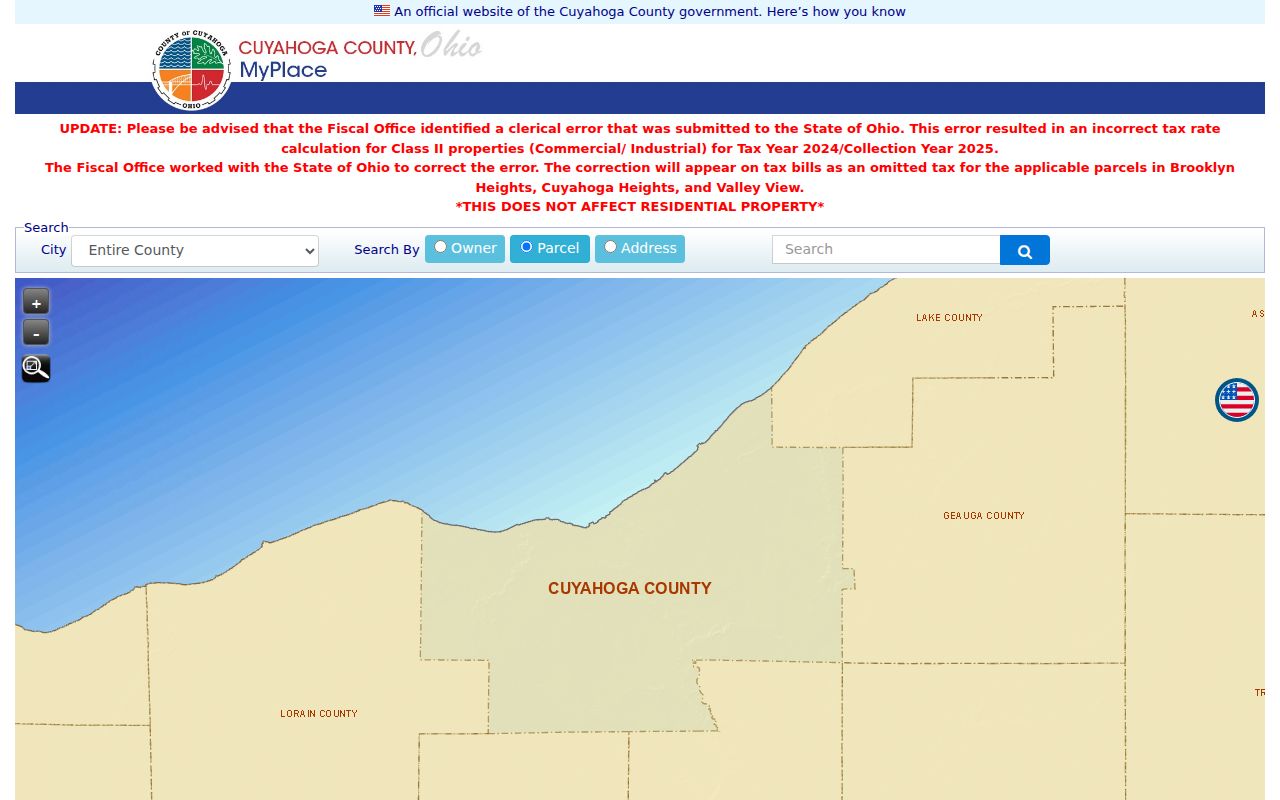
A result can identify a parcel owner and a situs address, but an owner or tax mailing field does not identify every resident at the property.
| MyPlace control | Use for Cleveland Heights research |
|---|---|
| City | Choose Cleveland Heights to narrow the county search. |
| Search By | Owner, Parcel, or Address is required before the text search. |
| Result Parcel ID | Opens the parcel detail and its record panels. |
| View Map | Shows the selected parcel in the county map viewer. |
Cuyahoga Deeds for Cleveland Heights
The Recorded Document Search adds the recorded side of an address trail. Cuyahoga County says its filed documents, including deeds, run from 1810 to the present. Quick Search accepts a party, subdivision, document type, or document number with a recorded-date range. Advanced Property Records adds Grantor, Grantee, party names, instrument dates, parcel ID, property address, volume and page, plus legal-description groups. Use the parcel number and legal description if a street spelling changes.
The Recorded Document Search is shown with its document controls below. The portal says downloads are free. A certified copy is a separate request, and the Recorder's listed copy charge is $2 per page plus $2 for certification.
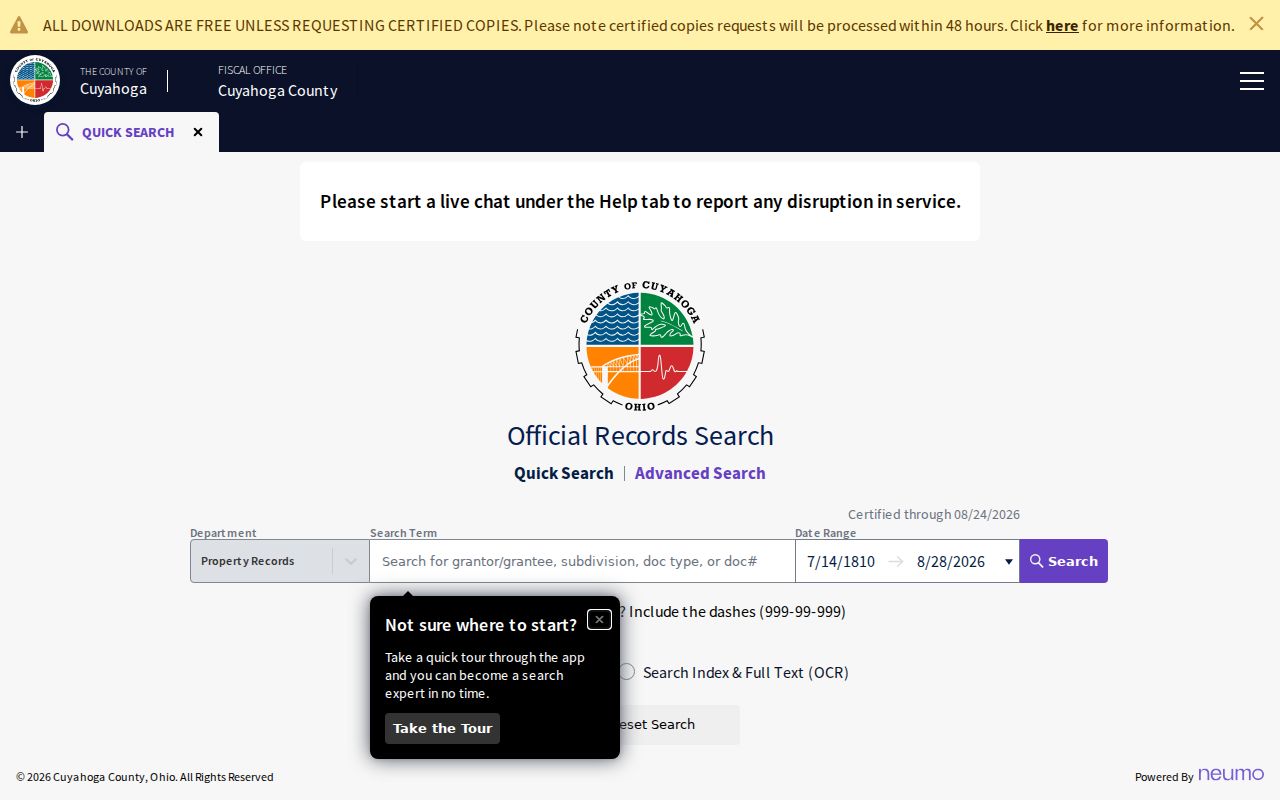
A detail record may show document number, recorded and instrument dates, consideration, party roles, parcel ID, property address, legal fields, and images or attachments. Those fields make a deed trail useful without claiming that a recorded party is a current resident.
Cleveland Heights Voter Records
Ohio's public voter tool is a name-and-county verification service, not a streetwide directory. The initial form requires first name, last name, and County, so select Cuyahoga for a Cleveland Heights search. It can help verify registration, precinct, polling details, and permitted history fields at the record date. Try a derivative first name, former surname, or prior Ohio address when the result does not appear, then contact the Board of Elections if necessary.
Ohio law allows public access subject to exclusions. Full or partial Social Security numbers, state-ID numbers, phone numbers, email addresses, confidential registrations, and other protected material remain unavailable. Ballot choices are not disclosed by the tool. A Safe at Home participant can be absent from public-facing registration data.
For a fuller resident-record route, the County Board can provide existing permissible records or data under its procedures, while Cuyahoga Archives holds Lists of Electors for 1893 through 1982. The basic online form should never be presented as a browse-by-address list.
Cleveland Heights Current Directories
Current sources each cover a narrow role. The best Cleveland Heights residents directory result comes from using the source that matches the question and clearly labelling its limits. MyPlace covers parcels and owners. The Recorder covers recorded parties. Voter information covers a registered voter when public disclosure permits it. City staff contacts are public, but they are not a resident roll. For a one-person verification sequence, use the Cleveland Heights resident lookup process after identifying the record type.
| Record source | Role it documents | Custodian | Access route |
|---|---|---|---|
| MyPlace parcel record | Owner, situs, property and tax context | Cuyahoga Fiscal Office | City plus Owner, Parcel, or Address search |
| Recorded documents | Grantor, grantee, or other recorded party | Transfer and Recording | Online index or Recorder counter |
| Voter registration | Permitted registration and precinct information | Ohio Secretary of State / Board | Name, name, and county lookup |
| Municipal staff directory | Public City staff contact | City of Cleveland Heights | Online department directory |
| Street club contacts | Voluntary civic participation route | Individual clubs / Community Relations | Organization contact, not a roster |
Commercial directory products can combine older material from many places, but their display does not replace a current custodian record. For a family-history, estate, civic, or personal-safety question, compare the official record with its date and source.
Cleveland Heights Court Record Split
Court research divides by jurisdiction. Cleveland Heights Municipal Court CaseLook offers Record Search, Hearing Calendar, and Probation Search. The local rules say court files are presumed open, with electronic retention for cases filed after January 1, 2011 and access restrictions under the Ohio Rules of Superintendence. A party name can be a lead, not proof of a current address.
The Cuyahoga County Clerk of Courts keeps Common Pleas General Division, Domestic Relations, and Eighth District records. The screenshot shows the Clerk route used to reach its case search system.
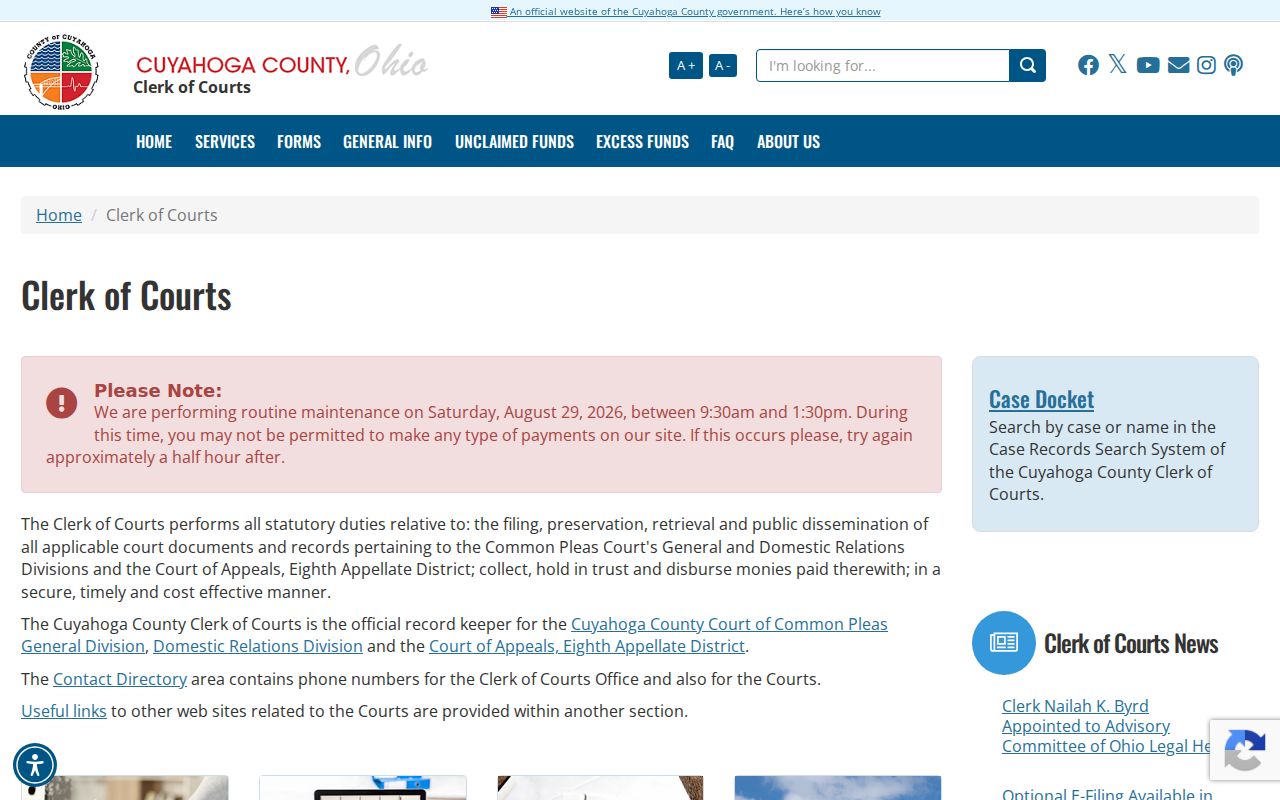
Common Pleas Civil Name searches reach 1980 forward and Civil Case searches 1950 forward, but some documents have remote-access limits. Record the case number, party role, date, and docket event before asking the court clerk about an official copy.
Cleveland Heights Vital and Probate
Vital records and estate files can establish an event or family-history lead. Ohio Revised Code 3705.23 uses a signed-application-and-fee rule for certified copies, with separate limits for medical and health information in a birth record. Cleveland Heights directs local birth and death requests to the City of Cleveland Office of Vital Records. Marriage certificates belong with Cuyahoga Probate Court, while divorce records are a Common Pleas matter.
The Cleveland vital-record service shows the practical birth and death request route used by Cleveland Heights residents.
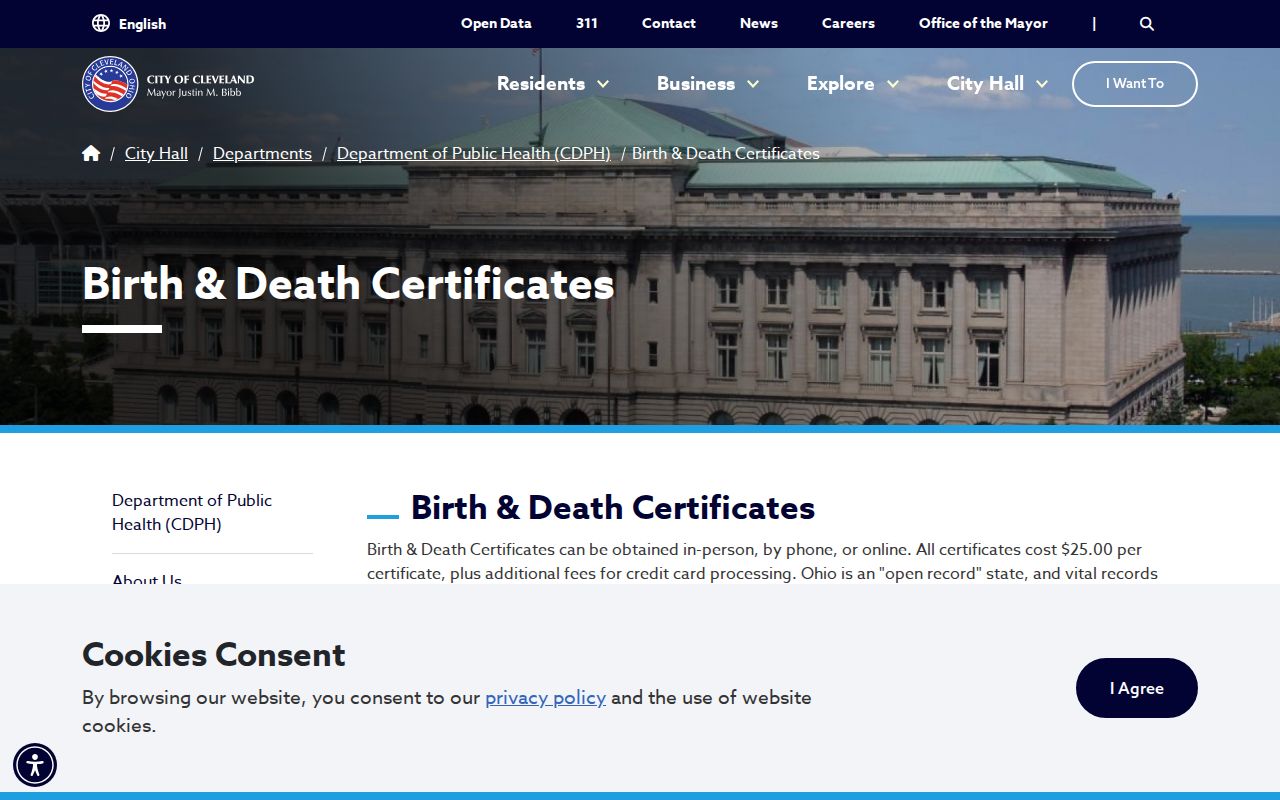
For an heir trail, the Cuyahoga Probate Court and County Archives are the proper paths. Archives estate indexes cover 1813 through 1993, while estate files there cover 1813 through 1918. A newer case follows the Probate Court's current copy process.
The Probate Court homepage below is a starting point for estates, guardianships, adoptions, and marriage licenses. Search with the decedent's name and date when available, then keep the case number with any copy request.
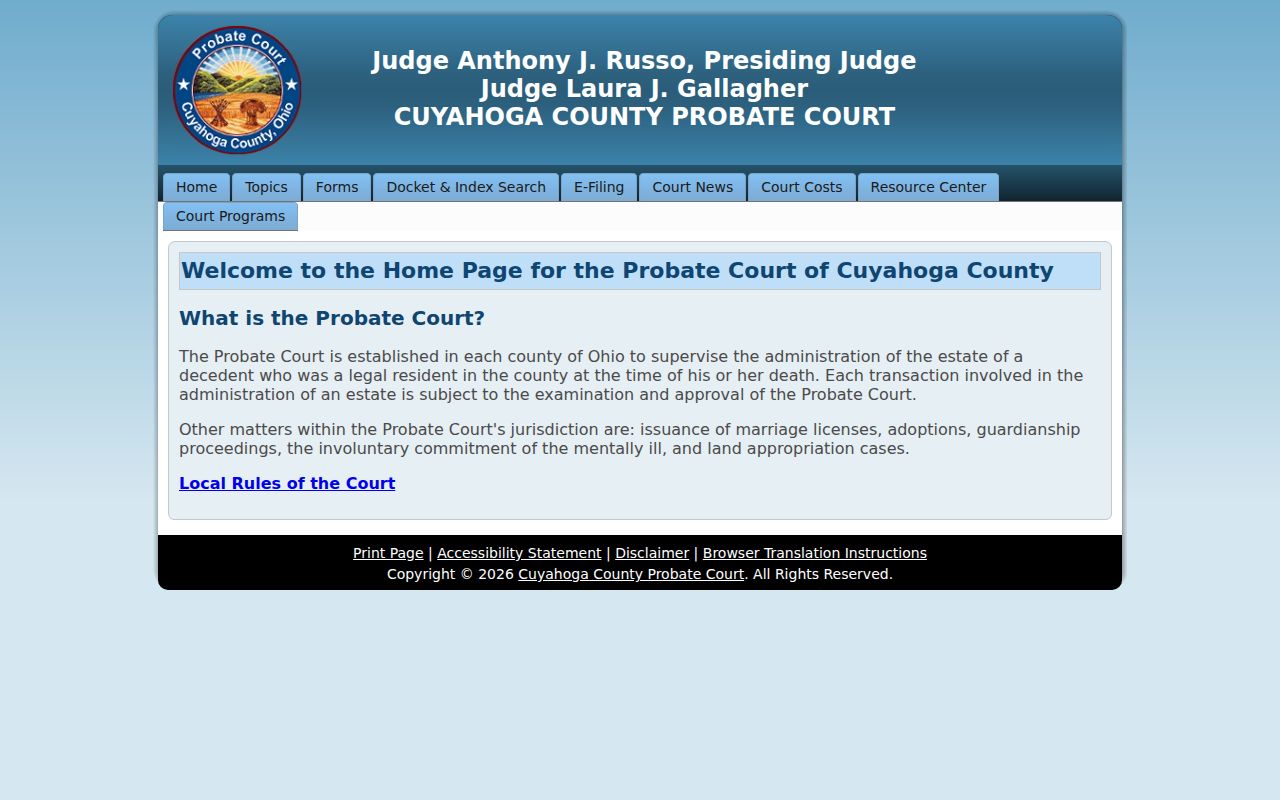
Probate records can contain case-specific limits and redactions. They document a legal proceeding, not a verified way to contact a living person.
Cleveland Heights Historical Directories
For older Cleveland Heights residents, use the directory title and year as evidence. Cleveland Public Library says its 1925 Cleveland directory specifically names Cleveland Heights among covered suburbs. From 1949 forward, the Historical Society identifies a separate Heights title within the Cleveland City Directory Co. five-city run. CPL's East Suburban holdings continue with selected volumes from 1964 through 1978/79, and gaps in publication can resemble a household move.
A standard city directory is usually name to address and occupation. A criss-cross directory runs address to listed occupant, which makes it the better historical address starting point. Cleveland Public Library, Heights Libraries, and Cuyahoga County Archives offer overlapping but incomplete routes. The full shelf history and reading method are on the Cleveland Heights city directory page.
- Parcel
- A county identifier for a piece of land that connects property, map, and deed records.
- Index
- A searchable list that points to a record; it is not always the record image or certified copy.
- Criss-cross directory
- A historical address listing that can lead from a street number to a printed occupant name.
- Situs address
- The physical location of a parcel, distinct from an owner's tax mailing address.
Cleveland Heights ZIP Record Limits
Cleveland Heights uses four documented address ZIP codes: 44106, 44112, 44118, and 44121. These codes are postal delivery geography, not city boundaries and not resident rolls. The Postal Service's address lookup is the right way to verify a delivery ZIP for one address. MyPlace starts with a municipality and Owner, Parcel, or Address mode, rather than a ZIP-only search.
The County Recorder's advanced criteria include property address and parcel ID, but the captured form does not document a ZIP filter. Start from the City filter, exact street address, parcel number, or legal description. Then use USPS to check how the address is delivered. That keeps a postal label from being mistaken for a municipal or household boundary.
Cleveland Heights Protected Addresses
Ohio public-record access has real boundaries. Safe at Home can keep a participant's voter registration confidential and supports a real-property confidentiality notice for a participant who acquires property. The program also keeps a designated address out of ordinary public disclosure. Voter law separately excludes identifying fields such as telephone, email, state-ID information, and confidential registrations. An empty result is never evidence that a person does not live in Cleveland Heights.
Ohio's Public Records Act requires prompt inspection of public records during regular business hours and copies at cost within a reasonable time, subject to exemptions. It lets a requester ask for an existing record. It does not require an agency to assemble a new resident list or disclose protected information.
Cleveland Heights Records Timeline
Cleveland Heights address history is unusually rich when the online trail ends. The County's recorded-document index reaches from 1810 to the present. County Archives preserves tax records from 1819 through 1986, original map volumes from about 1860 through 1945, and appraisal cards from about 1935 through 1970. City Planning reference plats survive for 1898, 1912, 1914, 1920, and 1941. Those distinct time ranges are more useful than treating one modern address as fixed across every decade.
The County Archives property-research guide explains the local route for maps, tax records, and historical property research.
Historic materials also require address caution. County Archives warns that street names, dimensions, and property descriptions can change. Preserve the legal description and parcel number, then consult a period plat or map if the street form does not match.
Cleveland Heights Narrow State Records
Ohio eLicense is a narrow official record that can verify a published credential and its status. A credential result is not a residence match by itself, so compare the name, board, credential number, and record date.
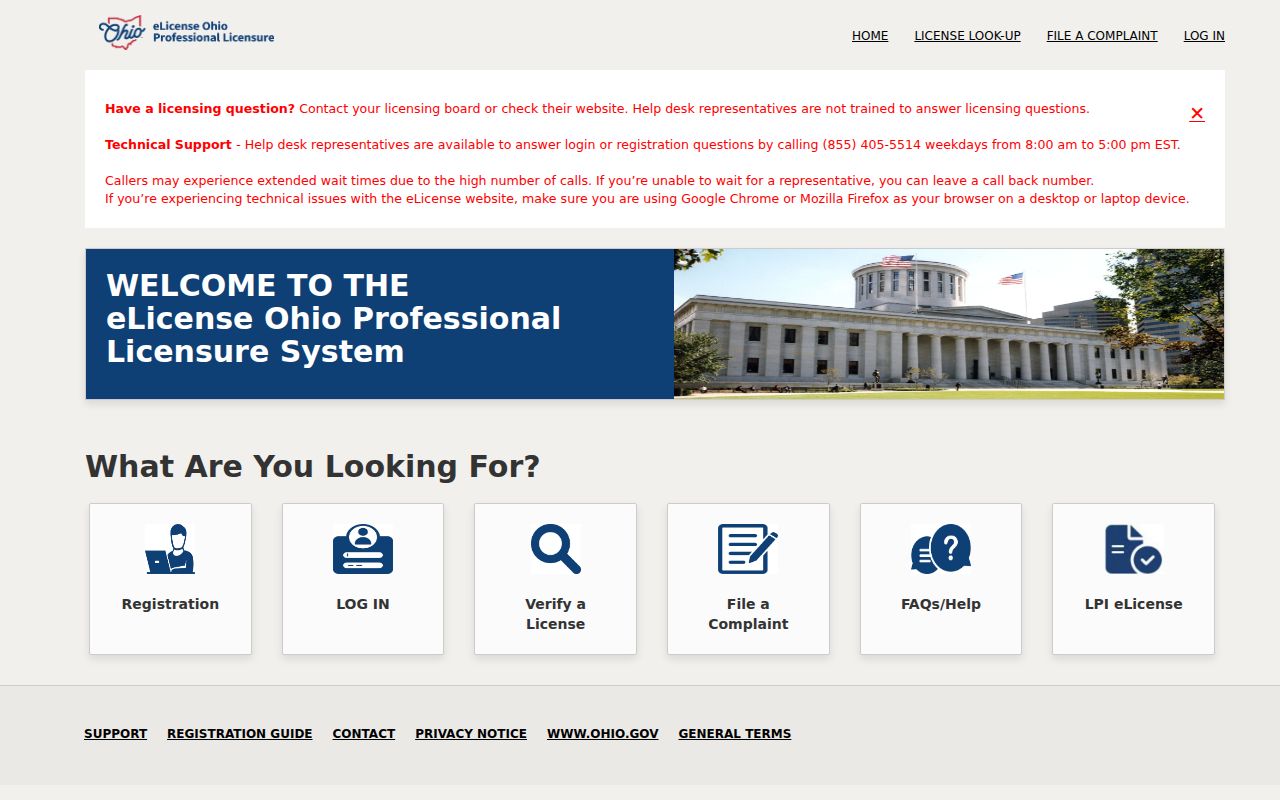
The eLicense entry point is useful when the record question concerns a particular credential. It should not be used to infer a private address or merge similar names without the credential details.
Some state systems answer a limited question without becoming part of a general residents directory. Ohio's official offender search lets a user select a last name, first name, county of commitment, residential county, ZIP, status, or offender number. Its residential-county and ZIP controls apply only to APA Supervision or Violators at Large, and any address is a last recorded address rather than a confirmed current location.
The Ohio Department of Rehabilitation and Correction search is shown below. Use the state source only for its stated purpose and read the status and address cautions on the result.
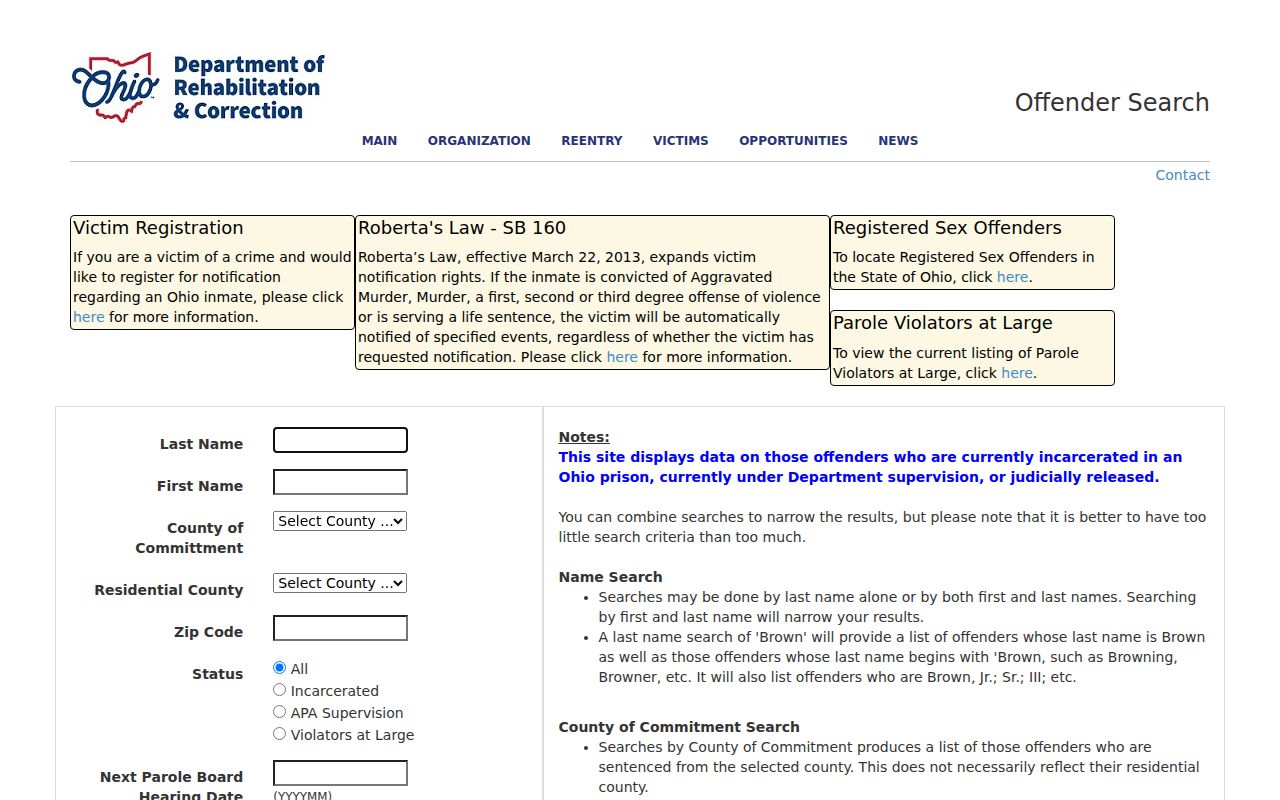
This result category is not a neighborhood or resident list. A record can be incomplete, historical, or subject to status changes.
Cleveland Heights Request Fallback
When a City record is not published online, Cleveland Heights directs requests through its Law Department and NextRequest channel. A focused request can identify the existing record, date range, address, permit type, incident number, or name spelling. The City allows requests by portal, phone, in person, email, or letter, and it does not require special wording. It does not have to create a new list in response.
The Cleveland Heights Law Department page links to the City's records-request process shown below.
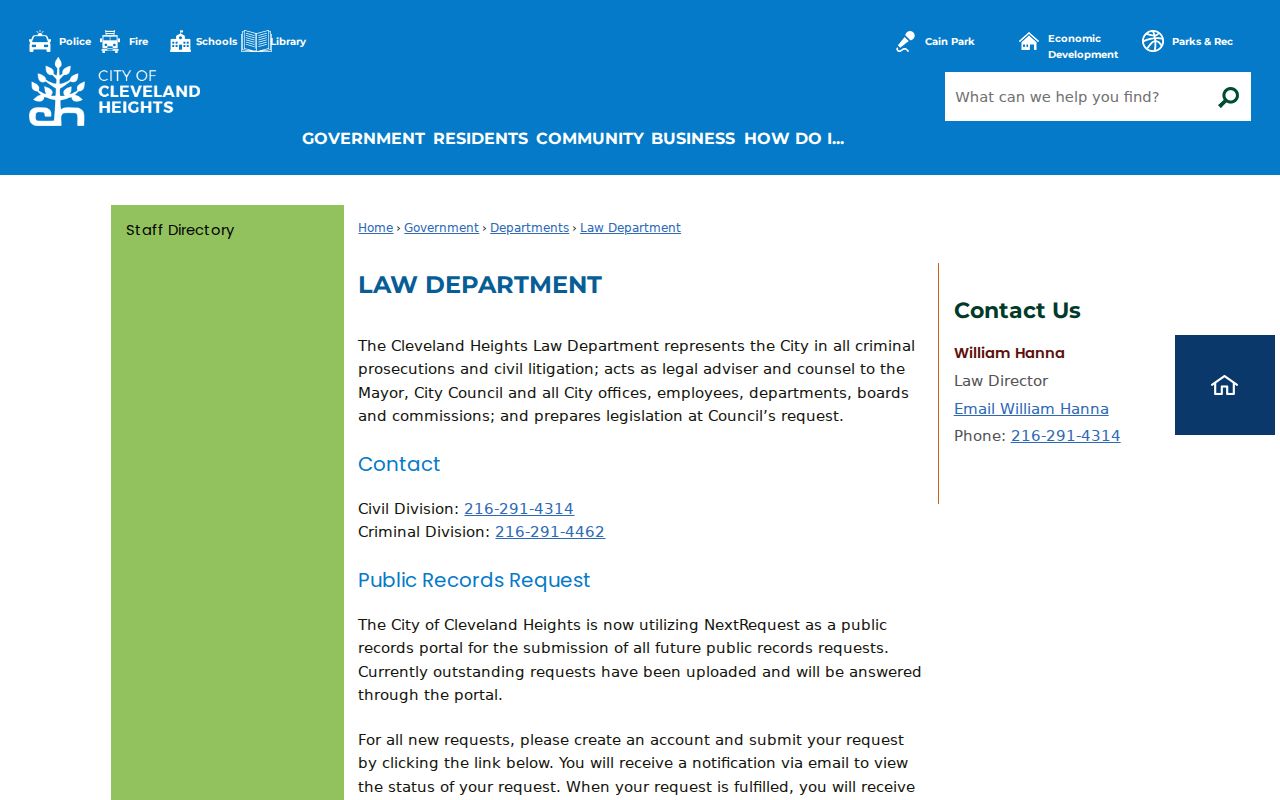
For county-created historical records, Cuyahoga Archives offers appointment, reading-room, email, and mail routes. Give the archive a record type, surname, dates, page or volume facts, and a mailing address. That level of detail helps staff find an existing item without asking them to reconstruct a directory.