
Find Cleveland Heights Resident Records
Cleveland Heights keeps no single public household list. The dependable route depends on the question. Deed and parcel questions start with the Cuyahoga Fiscal Office. Registration questions belong to Ohio's voter system. A dated family-history question often lands in a library directory. It may also land in a County Archives volume or a probate index. Each record captures a role at one moment in time. A property card names an owner. A city directory names a listed occupant in the printed year.
Begin with the strongest detail you already have. Keep the record date attached to every result. A common name needs a second anchor. That could be a parcel number, document number, occupation, court case number, or a directory address. That habit keeps an owner, a court party, and a historical listing from collapsing into one person. Otherwise they blur together just because the names match.
- For an address, search MyPlace by City and Address, then save the parcel number and legal description.
- For ownership history, follow the parcel's transfer lead into the Recorded Document Search and compare grantor and grantee roles.
- For a registration or precinct question, use the Ohio voter form with first name, last name, and Cuyahoga County.
- For a past household, locate the correct directory year, then confirm it with maps, tax records, census material, or probate.
- When an online record stops, ask the custodian or Cuyahoga County Archives for the existing record by name, date, address, or volume.
Note: An empty online result can simply reflect a former name, a different record date, another custodian, or a protected record.
Cleveland Heights Resident Record Offices
Most Cleveland Heights resident-record questions cross between city and county. The Fiscal Office holds the property and recorded-document routes. The Board of Elections runs the registration resources. City departments keep permits and other municipal files. The Law Department routes general City requests through NextRequest. Start with the office that created the record. That yields a far clearer answer than a broad name search.
Fiscal Office Transfer and Recording
2079 E. Ninth Street, 4th floor
Cleveland, OH 44115
216-443-7420
Cuyahoga Fiscal Office
Property, parcel, transfer, tax, and map records
Cuyahoga County, Ohio
216-443-7300
Board of Elections
1803 Superior Avenue
Cleveland, OH 44114
216-443-VOTE (8683)
Cleveland Heights Parcel Records
MyPlace is the county's practical first stop for a Cleveland Heights address. Pick Cleveland Heights from the City list. Choose Owner, Parcel, or Address, and type the matching text. An opened parcel leads to general information, transfers, values, land, building details, permits, and tax-by-year figures. It also offers a property summary report, a document link, and View Map. The permanent parcel number bridges the address to the recorded land record.
The official MyPlace search displays the City selector and its three search modes. The County describes it as an information service. It says the underlying custodian record remains controlling.
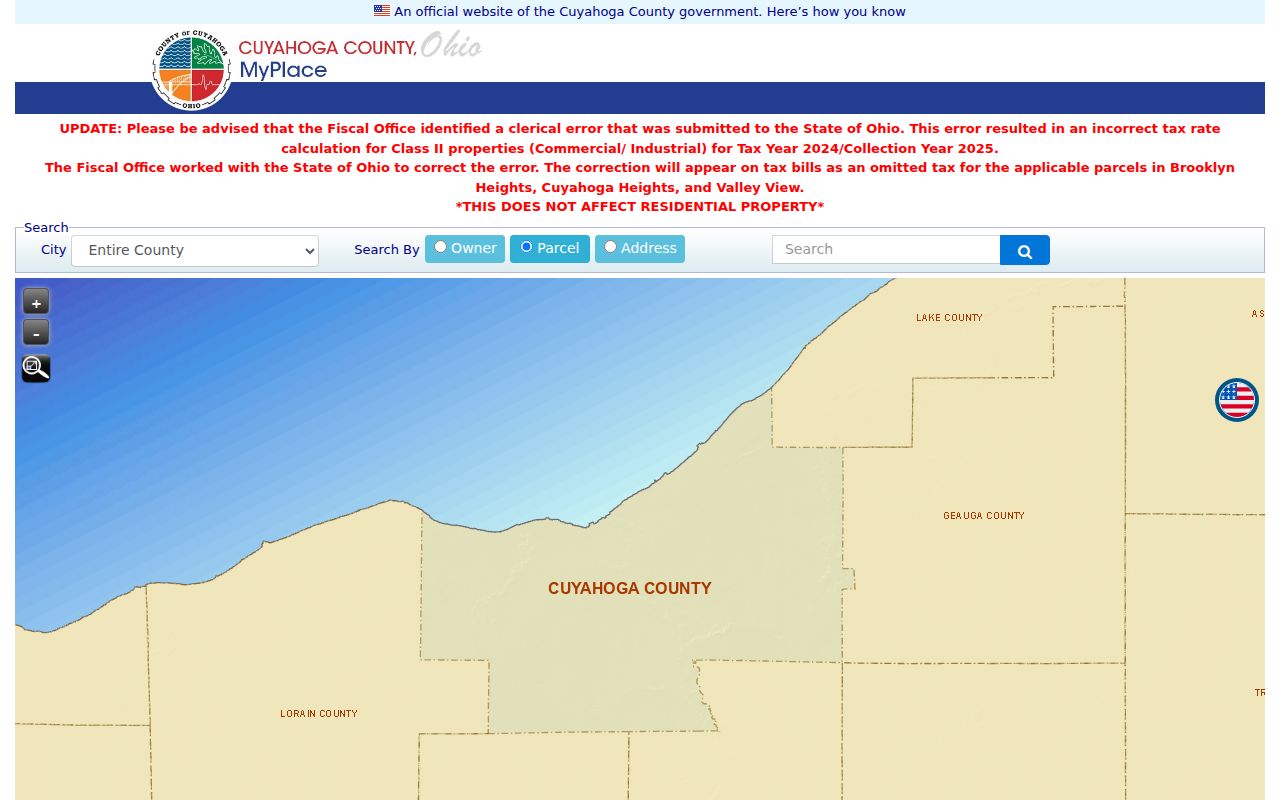
A result names a parcel owner and a situs address, but an owner or tax mailing field never identifies every resident at the property.
| MyPlace control | Use for Cleveland Heights research |
|---|---|
| City | Choose Cleveland Heights to narrow the county search. |
| Search By | Owner, Parcel, or Address is required before the text search. |
| Result Parcel ID | Opens the parcel detail and its record panels. |
| View Map | Shows the selected parcel in the county map viewer. |
Cuyahoga Deeds for Cleveland Heights
The Recorded Document Search adds the recorded side of an address trail. Cuyahoga County says its filed documents, including deeds, reach back to 1810. Quick Search accepts a party, subdivision, document type, or document number with a recorded-date range. Advanced Property Records adds Grantor, Grantee, party names, instrument dates, parcel ID, and property address. It also covers volume and page, plus legal-description groups. If a street spelling changes over time, lean on the parcel number and the legal description.
The Recorded Document Search presents those document controls on its main page. The portal says downloads are free. A certified copy is a separate request. The Recorder's listed charge is $2 per page plus $2 for certification.
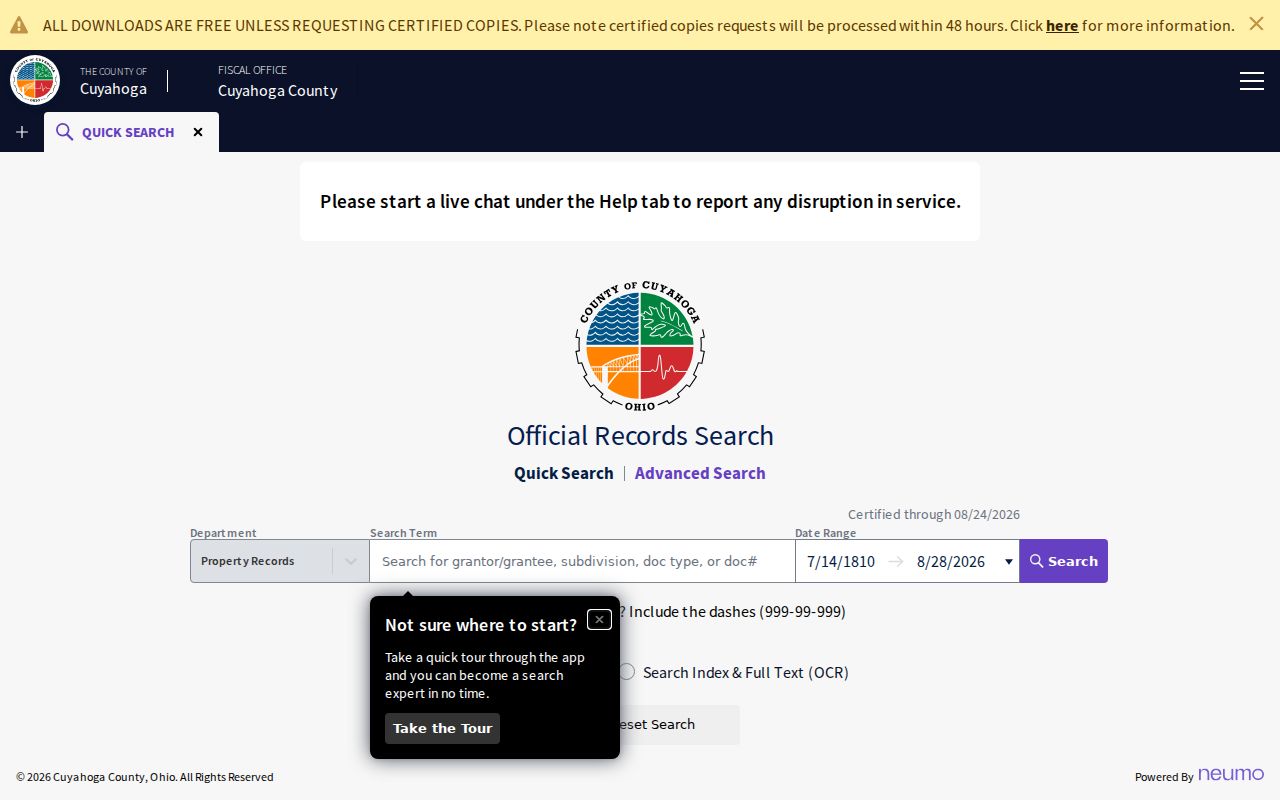
A detail record may list a document number, recorded and instrument dates, consideration, party roles, parcel ID, property address, and legal fields. Images or attachments can appear too. Those fields make a deed trail useful without pretending a recorded party still lives there.
Cleveland Heights Voter Records
Ohio's public voter tool verifies names by county; it is not a streetwide directory. The form requires first name, last name, and County. Select Cuyahoga for a Cleveland Heights search. It can confirm registration, precinct, polling details, and permitted history fields at the record date. Try a derivative first name, a former surname, or a prior Ohio address if nothing appears. Then contact the Board of Elections if needed.
Ohio law allows public access with exclusions. Full or partial Social Security numbers, state-ID numbers, phone numbers, email addresses, confidential registrations, and similar protected material stay unavailable. The tool never discloses ballot choices. A Safe at Home participant may be absent from public-facing registration data.
For a fuller route, the County Board can supply existing permissible records under its procedures. Cuyahoga Archives holds Lists of Electors covering 1893 through 1982. The basic online form is not a browse-by-address list. It should never be treated as one.
Cleveland Heights Current Directories
Each current source covers one narrow role. The best Cleveland Heights residents directory result comes from matching the source to the question and stating its limits plainly. MyPlace covers parcels and owners. The Recorder covers recorded parties. Voter information covers a registered voter when disclosure permits. City staff contacts are public, but they are not a resident roll. To verify one person step by step, use the Cleveland Heights resident lookup process after identifying the record type.
| Record source | Role it documents | Custodian | Access route |
|---|---|---|---|
| MyPlace parcel record | Owner, situs, property and tax context | Cuyahoga Fiscal Office | City plus Owner, Parcel, or Address search |
| Recorded documents | Grantor, grantee, or other recorded party | Transfer and Recording | Online index or Recorder counter |
| Voter registration | Permitted registration and precinct information | Ohio Secretary of State / Board | Name, name, and county lookup |
| Municipal staff directory | Public City staff contact | City of Cleveland Heights | Online department directory |
| Street club contacts | Voluntary civic participation route | Individual clubs / Community Relations | Organization contact, not a roster |
A commercial directory product can blend old listings from many places into one display. It still cannot replace a current custodian record. For family history, estate work, civic questions, or personal safety, compare the official record with its own date and source.
Cleveland Heights Court Record Split
Court records in Cleveland Heights follow a two-track split. The Cleveland Heights Municipal Court CaseLook provides Record Search, Hearing Calendar, and Probation Search. Its local rules presume files are open. Electronic retention covers cases filed after January 1, 2011. The Ohio Rules of Superintendence set the access limits. Treat a party name as a lead only. Never treat it as proof of where someone lives now.
Above the municipal court sits the county level. The Cuyahoga County Clerk of Courts holds Common Pleas General Division, Domestic Relations, and Eighth District records. It is reachable through its own case search system.
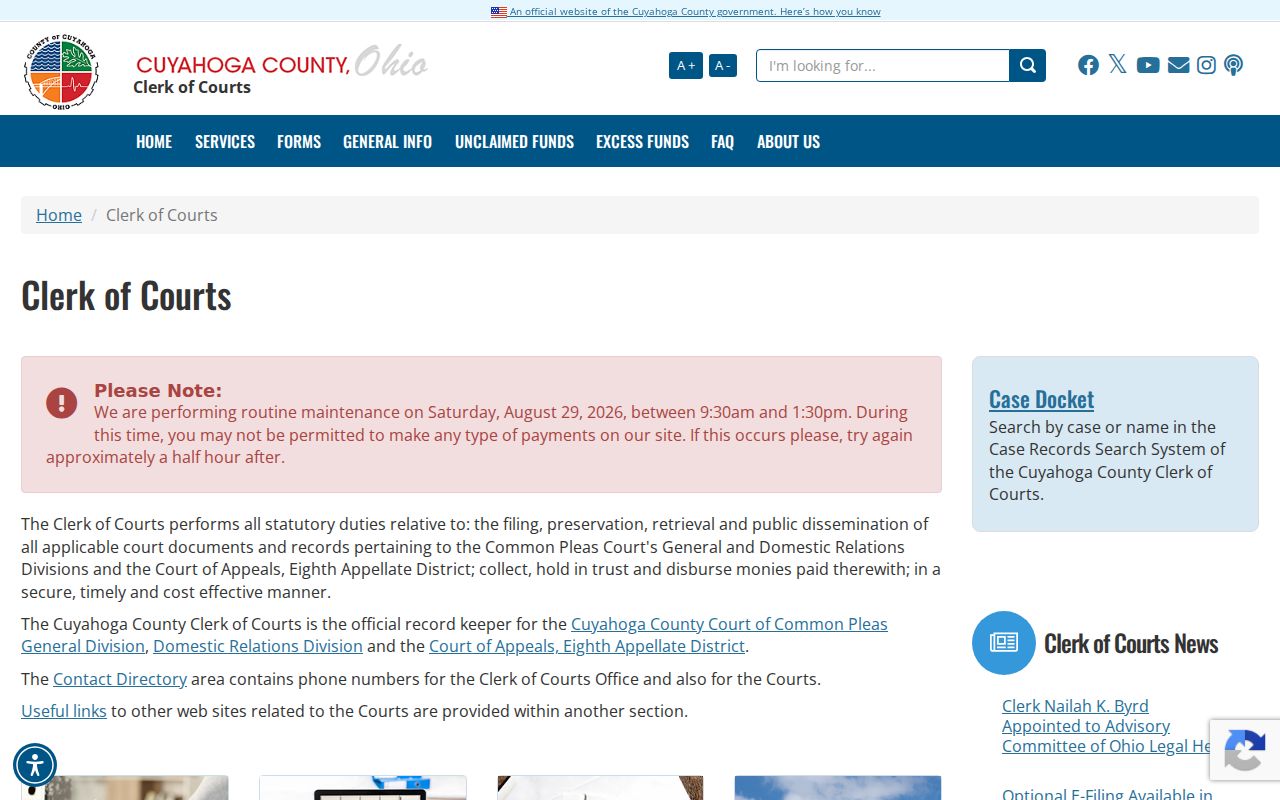
Depth varies by search type at the Clerk of Courts. Common Pleas Civil Name searches reach back to 1980. Civil Case searches go to 1950. Some documents carry remote-access limits, so note the case number, party role, date, and docket event before requesting an official copy from the clerk.
Cleveland Heights Vital and Probate
Birth and death papers anchor many family-history leads. Ohio Revised Code 3705.23 sets a signed-application-and-fee rule for certified copies. It also places separate limits on medical and health details inside a birth record. Cleveland Heights sends local birth requests to the City of Cleveland Office of Vital Records. Death requests go to that same office. Marriage certificates sit with Cuyahoga Probate Court, and divorce records belong to Common Pleas. The Cleveland vital-record service lays out the birth request route that Cleveland Heights residents follow. It also walks through the death record path.
Tracing an heir means working through two county institutions. The Cuyahoga Probate Court and the County Archives hold the estate material. Archives estate indexes span 1813 through 1993, while estate files there cover 1813 through 1918. Newer cases follow the Probate Court's current copy process.
The Probate Court homepage also covers guardianships, adoptions, and marriage licenses. Search with the decedent's name and date when known. Keep the case number handy with any copy request.
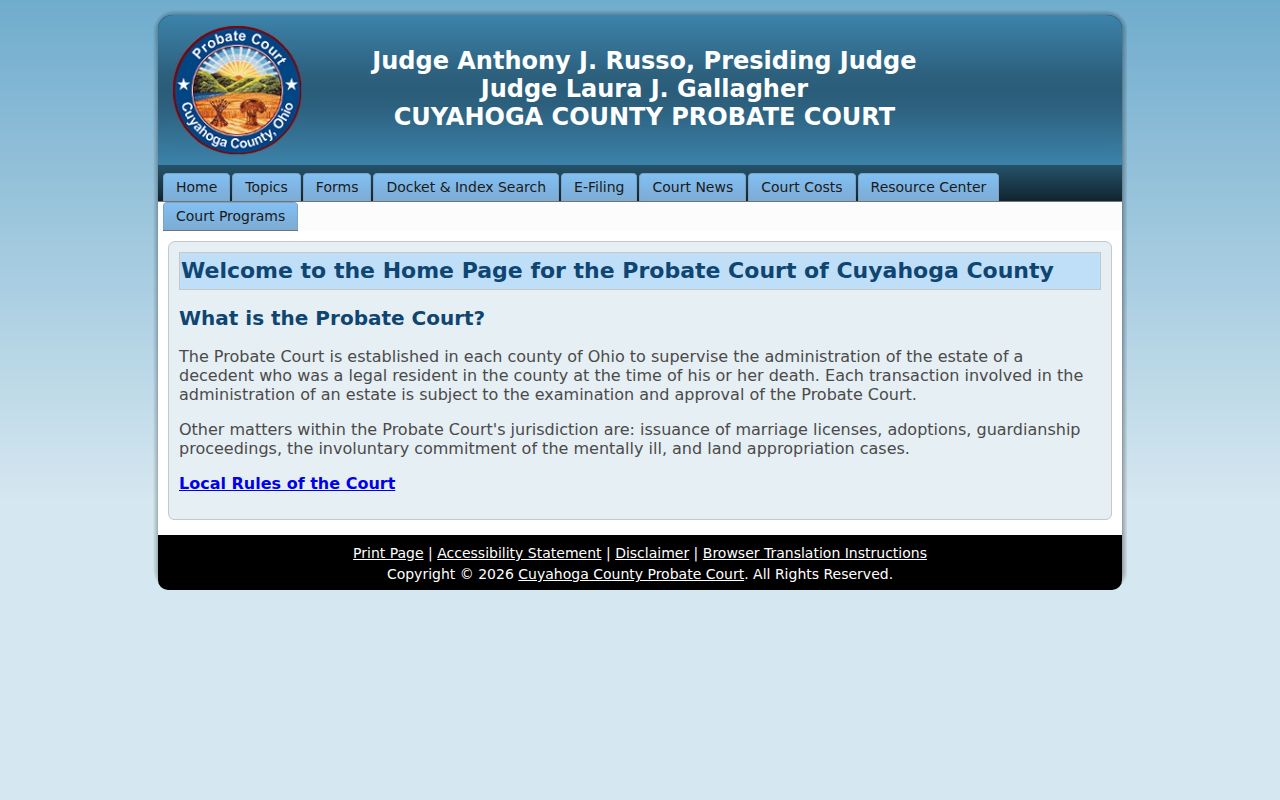
Probate files document a legal proceeding, and they can carry redactions or case-specific limits on top of that. Treat them as court records, never as a reliable way to reach a living person.
Cleveland Heights Historical Directories
Older Cleveland Heights residents turn up in printed directories. The title plus year matters as evidence. Cleveland Public Library notes that its 1925 Cleveland directory names Cleveland Heights among the suburbs it covers. From 1949 onward, the Historical Society places a separate Heights title inside the Cleveland City Directory Co.'s five-city run. CPL's East Suburban holdings then continue in selected volumes from 1964 through 1978/79. Publication gaps can mimic a household move. Check the years carefully before assuming anyone left town. A standard city directory runs name to address and occupation. A criss-cross directory flips that, address to listed occupant. That makes the criss-cross the better starting point for an address history. Cleveland Public Library, Heights Libraries, and the Cuyahoga County Archives each hold overlapping but incomplete runs. The full shelf history and reading method sit on the Cleveland Heights city directory page.
- Parcel
- A county identifier for a piece of land that connects property, map, and deed records.
- Index
- A searchable list that points to a record; it is not always the record image or certified copy.
- Criss-cross directory
- A historical address listing that can lead from a street number to a printed occupant name.
- Situs address
- The physical location of a parcel, distinct from an owner's tax mailing address.
Cleveland Heights ZIP Record Limits
Four documented ZIP codes carry Cleveland Heights addresses: 44106, 44112, 44118, and 44121. Postal geography is not municipal geography. A ZIP code is also not a resident roll. For verifying one address, the Postal Service's address lookup is the right tool. MyPlace, by contrast, starts from a municipality. It works through Owner, Parcel, or Address mode rather than a ZIP-only search. The County Recorder's advanced criteria cover property address and parcel ID. The form documents no ZIP filter. Begin instead with the City filter, an exact street address, a parcel number, or a legal description. USPS then confirms how the address is actually delivered. That sequence keeps a postal label from being mistaken for a boundary. The boundary in question is municipal or household, in the residents directory.
Cleveland Heights Protected Addresses
Ohio public-record access has real boundaries. Safe at Home keeps a participant's voter registration confidential. It also supports a real-property confidentiality notice when a participant acquires property, and it holds a designated address out of ordinary public disclosure. Voter law separately excludes identifying fields like telephone, email, state-ID information, and confidential registrations. So an empty result in any Cleveland Heights resident lookup proves nothing about where a person lives.
Ohio's Public Records Act sets the ground rules for the Cleveland Heights residents directory. It guarantees prompt inspection during regular business hours and copies at cost. A requester may ask for any record that already exists. The law stops short of forcing an agency to build a fresh resident list or hand over protected details from the residents directory.
Cleveland Heights Records Timeline
When the online trail goes cold, Cleveland Heights address history runs surprisingly deep. The county's recorded-document index stretches from 1810 to the present. County Archives also holds tax records covering 1819 through 1986. Its original map volumes span roughly 1860 to 1945. Appraisal cards run from about 1935 to 1970. City Planning keeps reference plats for 1898, 1912, 1914, 1920, and 1941. Treating one modern address as fixed across every decade is the mistake. Those separate time ranges do the real work for a Cleveland Heights street directory search.
The County Archives property-research guide lays out the local route through maps. It also covers tax records and historical property research.
Handle historic materials with care, though. County Archives warns that street names, dimensions, and property descriptions all shift over time. Keep the legal description and parcel number close. Then check a period plat or map whenever the street form does not match.
Cleveland Heights Narrow State Records
Ohio eLicense answers one narrow question. It confirms whether a professional credential exists and what its current status is. That confirmation is not a residence match on its own. Before treating a hit as relevant to a Cleveland Heights resident lookup, weigh the name, the issuing board, the credential number, and the record date together.
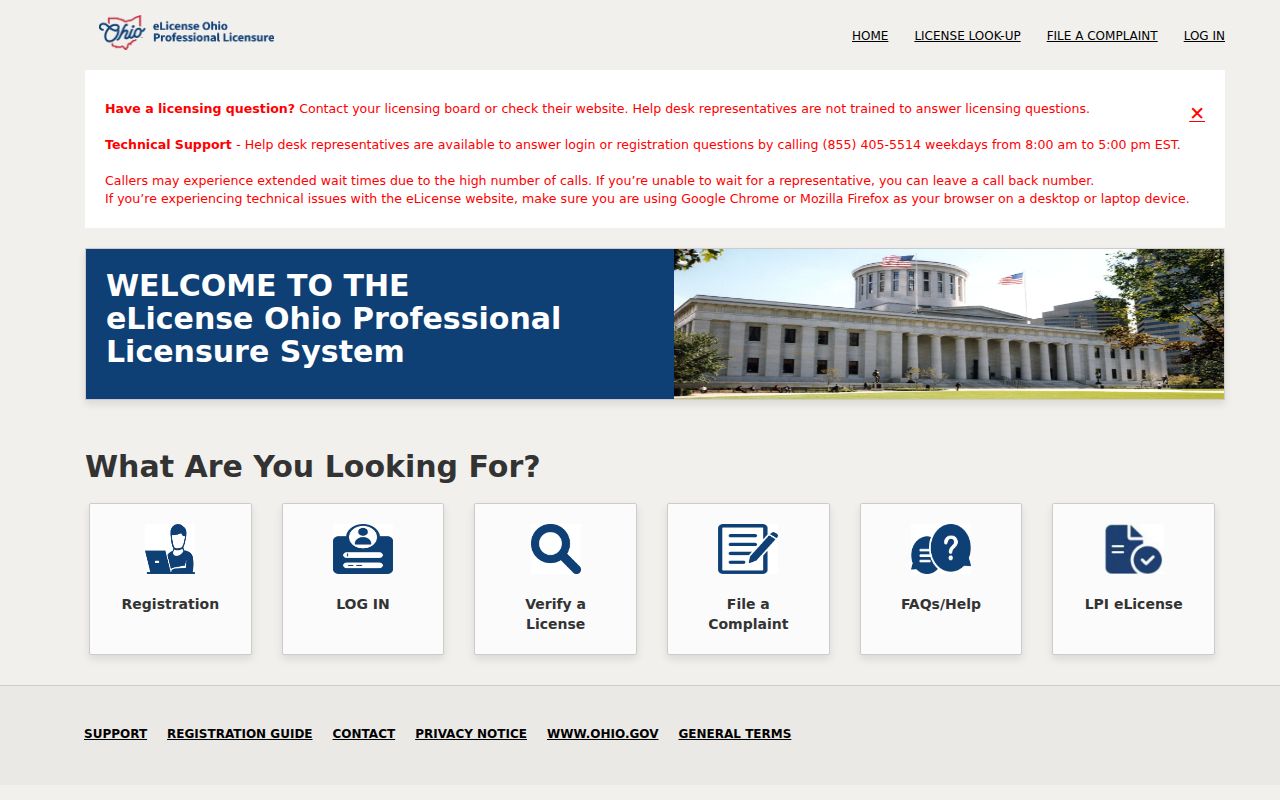
The eLicense portal earns its place when the question is really about a credential. It cannot supply a private address. Merging similar names without the credential details invites mistakes.
Narrow state systems answer limited questions. They do not function as a general residents directory. Ohio's official offender search is a good example. A user can narrow by last name, first name, county of commitment, residential county, ZIP code, status, or offender number. Two cautions apply. The residential-county and ZIP controls work only for APA Supervision or Violators at Large cases. Any address shown is a last recorded address, never a confirmed current one.
The Ohio Department of Rehabilitation and Correction search appears below. Stay within the state source's stated purpose. Read the status and address warnings on any result before drawing conclusions.
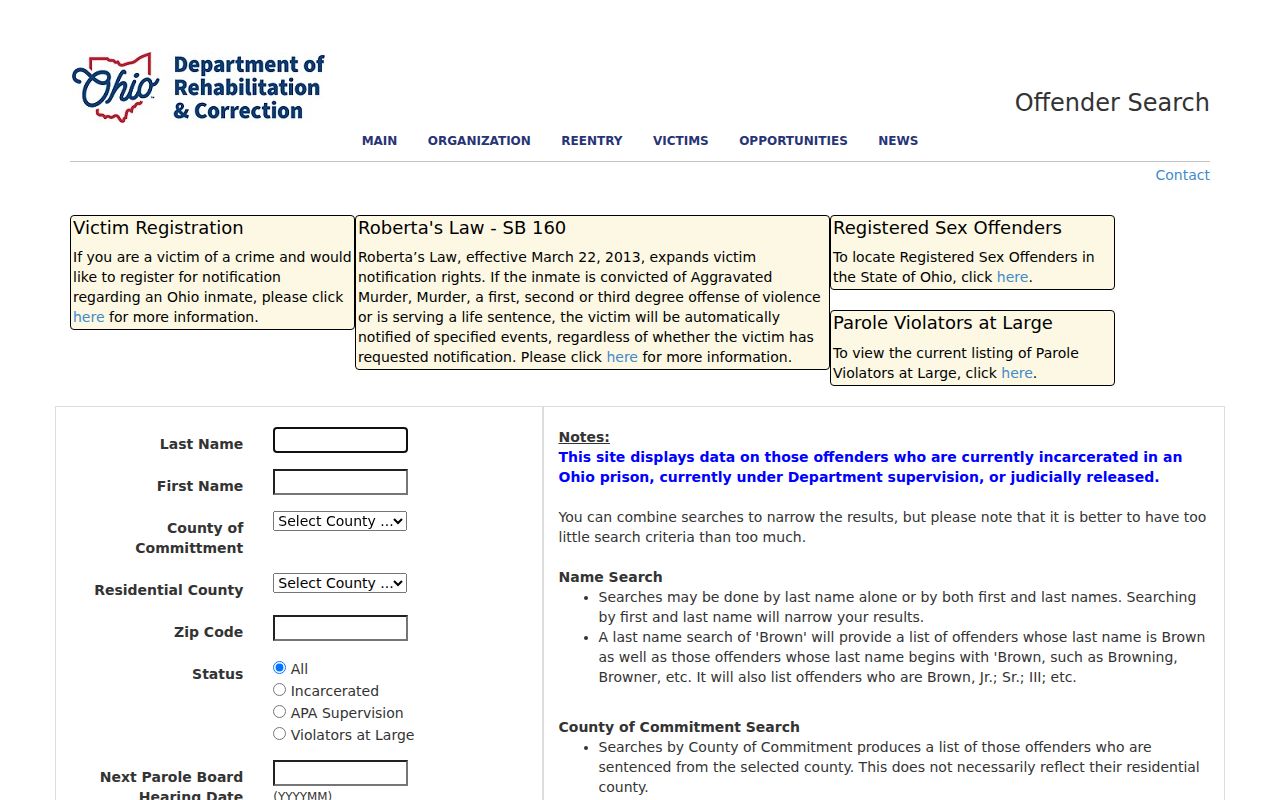
This result category is not a neighborhood or resident list. It holds narrow state records instead. A record can be incomplete, historical, or subject to status changes over time.
Cleveland Heights Request Fallback
Not every City record is published online. When something is missing, Cleveland Heights routes record requests through its Law Department. The NextRequest channel handles them too. A sharp request gets better results. Name the existing record, the date range, or the address. Include the permit type, the incident number, or the exact name spelling. Requests can arrive by portal, phone, in person, email, or letter. No special wording is required. The City does not have to build a new list to answer one.
The Cleveland Heights Law Department page links to that records-request process, shown below.
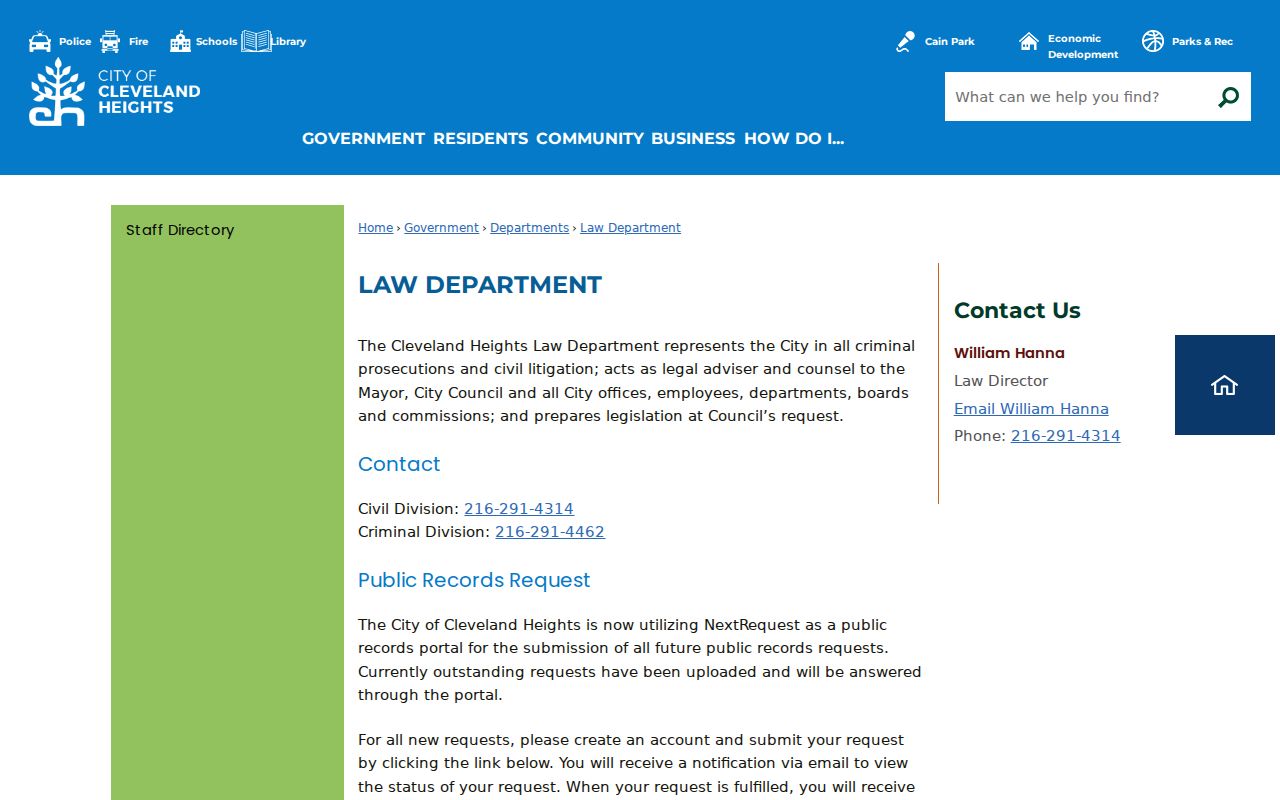
County-created historical records follow a different path. Cuyahoga Archives accepts appointments, reading-room visits, email, and mail requests. Give the staff a record type and a surname. Add dates, page or volume facts, and a mailing address. That detail lets them locate an existing item. They will not have to reconstruct a street directory from scratch.